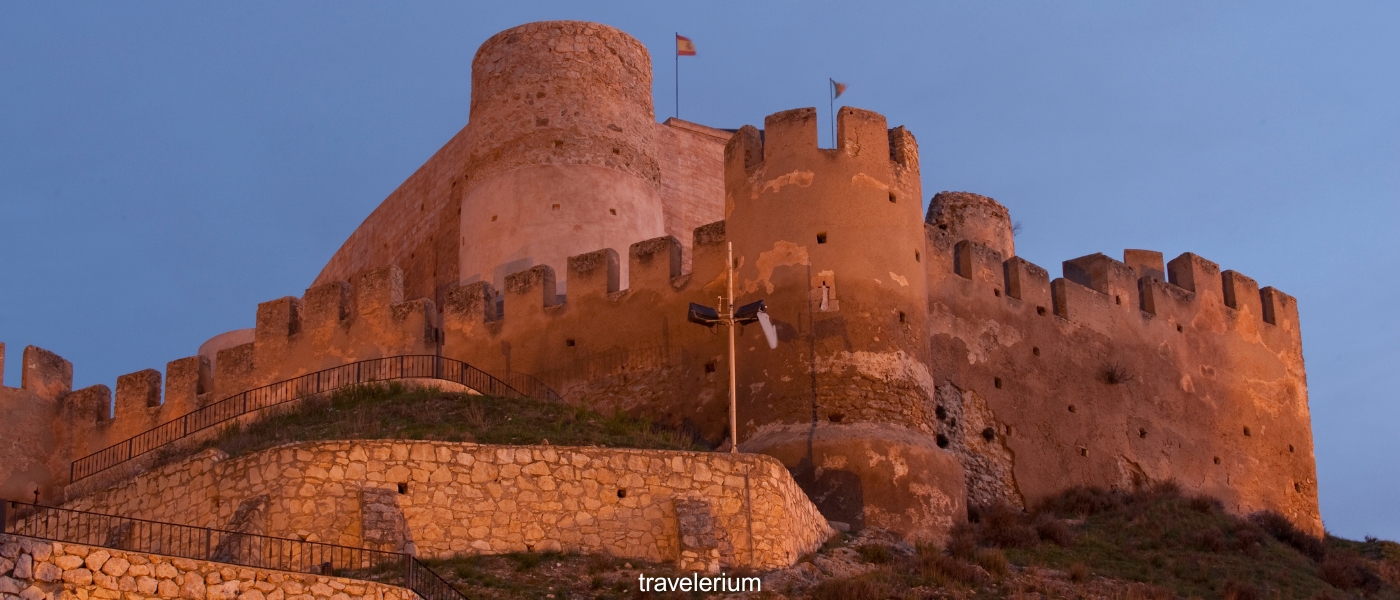
Stand on the ramparts of the Castle of Santa Bárbara at dusk, looking out over the terracotta rooftops of Alicante toward the glittering Mediterranean, and you begin to sense what most visitors miss entirely. The Costa Blanca has been drawing people to these shores for more than three thousand years — not for the beaches, but for the strategic depth of its coastline, the fertility of its valleys, and the extraordinary crossroads position it occupies between Europe, Africa, and the wider Mediterranean world.
Costa Blanca history and culture stretch back to a time when Iberian tribes painted animals and symbols onto limestone cave walls by firelight. They run through Roman colonisation, Moorish agricultural genius, medieval Christian kingdoms, and into the living traditions of Valencian-speaking communities that have preserved their identity through centuries of political change. This article traces that entire arc — from the earliest human presence in the region to its UNESCO World Heritage sites, its world-class museums, its festival calendar, and its still-thriving artisan traditions.
For practical travel planning alongside your cultural journey, be sure to explore our comprehensive Costa Blanca Travel Guide — The Ultimate Resource, which covers everything from transport to accommodation across the region.
What follows is not a list of attractions. It is a chronological and thematic journey through one of Europe’s most historically complex and culturally layered coastal regions.
Table of Contents
The Ancient World – Prehistory to Roman Conquest
The First People of the Costa Blanca
Human beings have been leaving their mark on this landscape for a very long time. The evidence begins, quite literally, on the walls of caves. Across the inland hills and gorges of Alicante province and the broader Valencian Community, rock shelters contain some of the most significant examples of prehistoric art found anywhere on the Iberian Peninsula. These images — rendered in red ochre and black manganese, depicting hunters, deer, archers, and abstract geometric forms — date from the Mesolithic period, roughly 10,000 to 6,000 years ago.
The archaeology and cave art of the region represent a rare, unbroken record of human creative and spiritual life across several millennia. Sites such as the Cueva de la Araña (Cave of the Spider) near Bicorp, just north of the Costa Blanca’s core territory, contain one of the world’s earliest known depictions of honey gathering — a human figure scaling a cliff face to reach a wild beehive. These aren’t isolated curiosities; they form part of a dense network of rock art sites that stretch across the eastern Iberian Peninsula, collectively recognised by UNESCO as outstanding examples of prehistoric human expression.
By the Bronze Age, settled communities were establishing hilltop villages across the region. The Iberian peoples who emerged from these earlier cultures developed sophisticated settlements — some fortified, some centred on trade — between roughly 500 BCE and the Roman conquest. The Iberians left behind distinctive pottery, bronze figurines, and written inscriptions in a script that is only partially deciphered, reminding us that the Costa Blanca’s ancient history is still yielding its secrets.
Phoenicians, Greeks, and the Coming of Rome
The coastline’s commercial appeal was not lost on the great seafaring cultures of the ancient Mediterranean. Phoenician traders arrived on this shore as early as the 9th century BCE, establishing trading posts and introducing new agricultural practices, metalworking techniques, and cultural exchanges that accelerated Iberian development. The Greeks followed, founding settlements that served as hubs for the exchange of ceramics, wine, oil, and metals between the Iberian interior and the wider Mediterranean world.
It was Rome, however, that transformed the region fundamentally. The Roman presence along the Costa Blanca was not merely military but deeply civic and infrastructural. The city of Lucentum — located on the hill of El Tossal de Manises, just north of modern Alicante — was a fully functioning Roman municipality, complete with forum, baths, walls, and a street grid. Its remains are preserved today within the TRAM archaeological park, offering a rare opportunity to walk through a Roman urban space in its original Mediterranean coastal setting.
The broader Roman history of the Costa Blanca encompasses roads, aqueducts, fish-salting factories (cetariae), and agricultural estates (villae) that fed the empire’s appetite for garum, olive oil, and wine produced in the fertile valleys behind the coast. The legacy of Rome is embedded in the region’s geography — in the orientation of ancient roads, the location of towns, and the Latin-based origins of the Valencian language itself.
Understanding Lucentum also requires understanding the later urban story of the city that replaced it. The history of Alicante traces a long line from early settlements through Roman, Moorish, and Christian rule into the modern provincial capital, with the city repeatedly reinventing itself on strategically important ground above the sea.
The Moorish Centuries – Al-Andalus on the Costa Blanca
Eight Centuries of Islamic Civilisation
In 711 CE, Berber and Arab forces crossed the Strait of Gibraltar and swept through the Iberian Peninsula with a speed that astonished the Christian kingdoms of the north. Within a decade, much of the territory that would become the Costa Blanca was incorporated into al-Andalus, the Islamic-ruled territories of the Iberian Peninsula. What followed was not an occupation in the purely military sense but an extended period of cultural transformation that left imprints still visible in the landscape, the language, and the agricultural systems of the region today.
The Moorish heritage of the Costa Blanca is layered and specific. In agriculture, Moorish engineers introduced or dramatically expanded irrigation systems — the acequias (irrigation channels) that made cultivation possible in the dry interior valleys. They cultivated rice, citrus fruits, pomegranates, figs, and almonds on a scale previously unknown in the region. The Palmeral of Elche — the extraordinary palm grove that still stands as a UNESCO World Heritage Site — was established and managed under Moorish agricultural administration, a living monument to their horticultural expertise.
The place names of the Costa Blanca preserve Arabic influence from centuries ago. Guadalest comes from an Arabic name often given as Wadi al-Qalʿa or a related form. Denia retains echoes of its Moorish incarnation as Daniya, a prosperous taifa (small independent kingdom) that, in the 11th century, controlled the Balearic Islands and maintained a court of considerable cultural refinement. Alcoy (Alcoi in Valencian) and Altea have toponyms influenced by Arabic, but their exact derivations are debated and are not securely established by these sources. These names are not mere historical footnotes — they are daily reminders of the depth of Moorish influence on the Costa Blanca.
Castles, Watchtowers, and the Architecture of Control
The Moorish centuries also reshaped the physical landscape through a network of defensive structures. Castles, watchtowers, and fortified alquerías (farm settlements) were positioned to control passes, monitor coastlines, and communicate through visual signalling across the hills. Many of the most dramatic hilltop castle sites in the region — Guadalest, Denia, Villena, Biar, Castalla — have Moorish foundations beneath their later Christian modifications.
The castles and fortifications of the Costa Blanca represent a layered military archaeology in which each successive ruling culture built upon, adapted, or demolished what came before. The Moors built to control; the Christians who followed built to consolidate — and the result is a series of castle landscapes that are inseparable from the cultural history of the entire region.
The Reconquista and Its Aftermath
The Christian Reconquista — the centuries-long campaign by Christian kingdoms to reclaim the Iberian Peninsula from Muslim rule — reached the Costa Blanca in the 13th century. Jaume I of Aragon conquered parts of the Valencian territory in the 13th century, incorporating them into the Crown of Aragon. The Moorish population — known as Mudejars — did not immediately disappear. Many remained, living under Christian rule and continuing their agricultural and craft traditions. They were eventually forced to convert (becoming Moriscos) and ultimately expelled between 1609 and 1614, a demographic catastrophe whose effects on the region’s population and agriculture took generations to recover from.
What the Reconquista could not erase was the cultural inheritance the Moors had deposited so deeply into the landscape, the language, the food, and the very soil of the Costa Blanca.
Medieval Heritage & the Crown of Aragon
A New Political Identity
The incorporation of the Costa Blanca into the Crown of Aragon in the 13th century marked the beginning of a long process of cultural reorientation. The region was constituted as the Kingdom of Valencia in 1238 following Jaume I’s conquest, and it retained considerable political autonomy within the Aragonese confederation. This autonomy had cultural consequences: the Kingdom of Valencia developed its own legal code (Furs de València), its own institutional structures, and crucially, its own literary and linguistic tradition.
The medieval period left significant architectural marks across the region. Gothic churches often rose on the foundations of mosques in conquered towns, and churches such as Valencia’s San Nicolás are among the best-known Valencian Gothic examples surviving from this period. The old quarter of Orihuela retains a concentration of Gothic and Renaissance civic buildings that makes it a notable historic town centre in the Valencian Community.
The fusion of Gothic structural ambition with Moorish decorative sensibility produced the Mudéjar style — a distinctly Iberian hybrid that appears in the ornamental brickwork, ceramic tilework, and wooden carved ceilings of churches and civic buildings across the region. Exploring the traditional Valencian architecture of this period reveals how cultures that were politically opposed nonetheless shared aesthetic vocabularies in ways that neither side could entirely suppress.
The Emergence of a Valencian Identity
Alongside the architectural record, the medieval period saw the crystallisation of a cultural identity that remains potent today. The Valencian language — spoken across the coastal and central territories of the former Kingdom of Valencia — is a Romance language closely related to Catalan, with its own distinctive phonology, vocabulary, and literary tradition dating back to the 13th century. The medieval poet Ausiàs March (c.1400–1459), born near Gandia, wrote in Valencian and is considered one of the finest lyric poets of the late medieval Mediterranean world.
Understanding the living Valencian cultural identity means recognising that language here is not simply a means of communication — it is a statement of belonging, a form of historical memory, and a political act that has acquired fresh significance in the contemporary period of Spanish regional politics.
UNESCO World Heritage – The Crown Jewels of Costa Blanca History & Culture
A Region of Outstanding Universal Value
UNESCO recognition is not awarded lightly. The criteria for World Heritage designation — whether for tangible sites or intangible cultural practices — require evidence of outstanding universal value: something that belongs not just to a nation but to all of humanity. The Costa Blanca and its immediate surroundings hold multiple UNESCO designations, and exploring them provides access to important cultural heritage in the region.
For a full overview of heritage recognition in the area, the dedicated guide to UNESCO Sites near the Costa Blanca maps the full landscape of recognition and candidacies, providing context for each designation.
The Palmeral of Elche
On the edge of the city of Elche (Elx in Valencian), approximately 25 kilometres southwest of Alicante, lies one of the most visually extraordinary cultural landscapes in Europe. The Palmeral of Elche — known in Valencian as the Palmerar d’Elx — is a cultivated palm grove with around 200,000 palm trees in the wider city, the largest in Europe and one of the largest outside the Middle East and North Africa.
Its origins are Moorish. When Arab and Berber settlers arrived in the 8th century, they brought with them the agricultural knowledge and irrigation techniques of the arid lands they came from, and they set about transforming the dry plain around Elche into productive agricultural land. The palm grove was not planted for aesthetic reasons but as a working agricultural system — the trees provided dates, fronds for religious ceremonies (notably Palm Sunday), and shade for the cultivation of pomegranates, citrus, and vegetables beneath their canopy.
What makes the Elche Palm Grove remarkable today is its survival largely intact across more than a thousand years of political, religious, and economic change. The irrigation system that feeds it — a network of channels and sluices regulated by the ancient Consell de l’Aigua (Water Council) — still functions using principles established under Moorish administration. UNESCO inscribed the Palmeral as a World Heritage Cultural Landscape in 2000, recognising it as an outstanding example of a living agricultural tradition transferred from one culture and continent to another, then maintained and adapted across a millennium.
Walking through the grove in the early morning, when the light filters through the dense canopy of feathered fronds and the air carries the smell of damp earth and ripening fruit, is an experience that connects the present directly to the 9th century in a way that no museum exhibit can replicate.
The Elche Mystery Play
Within the city of Elche, inside the Basilica of Santa Maria — itself a Gothic church built in the 17th century — something takes place every year on 14 and 15 August that has been happening, in recognisable form, since at least the 15th century.
The Elche Mystery Play — El Misteri d’Elx in Valencian — is a two-act medieval liturgical drama depicting the Dormition, Assumption, and Coronation of the Virgin Mary. It is performed entirely in medieval Valencian, sung throughout (it is, in effect, a medieval opera), and its staging involves elaborate machinery that lowers and raises performers from the church ceiling in gilded cloud-shaped contraptions called the mangrana (pomegranate) and the araceli (sky chariot). The cast includes more than 300 volunteers from Elche, with non-professional singers and a children’s choir, and the tradition is passed down through generations in the town.
What distinguishes the Elche Mystery Play from other European medieval theatrical survivals is its continuity. It was not simply continuous; after later protection and revival efforts, it continued as a living tradition. Even Pope Urban VIII, in 1632, issued a special papal brief permitting it to continue being performed inside a church — an exception to general Catholic prohibitions on theatrical performance in sacred spaces, recognising the play’s unique liturgical and cultural significance.
UNESCO inscribed the Mystery Play on its List of Intangible Cultural Heritage of Humanity in 2001, in one of the earliest acts of intangible heritage recognition. If you are in the Costa Blanca region in mid-August, attending this performance — or even arriving in Elche during the days of preparation and celebration that surround it — is one of the most genuinely rare cultural experiences available anywhere in Europe.
Other Notable Heritage Sites
Beyond Elche, the region contains additional sites of exceptional heritage significance. The prehistoric rock art of the Mediterranean Basin, which includes numerous sites within the Valencian Community, holds collective UNESCO World Heritage status inscribed in 1998. The fortified medieval town of Biar and the broader Vinalopó castle route have been proposed or discussed for heritage recognition. And the huerta landscapes around Orihuela are viewed as a continuation of Moorish agricultural systems that some scholars argue deserve formal protection.
Museums & Cultural Institutions
Reading the Past Through Its Objects
A region’s museums are not simply repositories of old things. At their best, they are interpretive frameworks that help visitors understand why the past matters to the present. The cultural museums across the Costa Blanca range from world-class provincial institutions to small, passionately curated municipal collections that illuminate a single town’s particular story with remarkable depth.
For a full guide to the museum landscape across the region, the dedicated overview of museums of the Costa Blanca provides a comprehensive directory with visitor information, highlights, and practical guidance.
MARQ – Museo Arqueológico Provincial de Alicante
At the top of any serious cultural itinerary for the region sits the MARQ — the Museo Arqueológico Provincial de Alicante, located in the city of Alicante itself. The museum received the European Museum of the Year Award in 2004, and it genuinely deserves the recognition.
The building is the former Hospital Provincial of Alicante, a 20th-century structure converted into a state-of-the-art archaeological museum. What sets the award-winning MARQ Museum apart from conventional regional archaeology museums is its use of immersive, thematic gallery design. Exhibits are organised into dedicated rooms representing different periods — Prehistory, Iberian, Roman, Medieval — each with its own architectural atmosphere, lighting design, and audiovisual interpretation. Visitors move through time not just intellectually but physically and sensorially.
The collections span much of the human occupation of Alicante province, from Palaeolithic remains through Iberian, Roman, and medieval materials. The Dama de Elche — arguably the most famous Iberian sculpture ever found — is not held here (it resides in the Museo Arqueológico Nacional in Madrid), but MARQ’s holdings are comprehensive enough to tell the full story of the region’s ancient and medieval past without it.
MUA – Museo Universidad de Alicante
The MUA Contemporary Art Museum is a contemporary art museum at the University of Alicante in Alicante, Spain. The MUA is a contemporary art institution with a collection and exhibition program focused on contemporary art.
What makes the MUA particularly interesting in the context of Costa Blanca culture is its commitment to connecting contemporary artistic production with the region’s own cultural landscape. Temporary exhibitions at the MUA engage with contemporary art themes and diverse cultural and social issues.
Other Museums Worth Noting
The Museo Arqueológico Municipal de Villena holds one of Spain’s most important Bronze Age treasures — the Villena Treasure, discovered in 1963, a hoard of gold and silver objects of extraordinary craftsmanship dating to around 1000 BCE. The MUSA — the Museo de la Ciudad de Alicante — occupies rooms carved into the rock beneath the Castle of Santa Bárbara and tells the story of the city through the castle’s own archaeological layers. And across the region, local municipal museums in towns like Dénia, Xàbia (Jávea), and Orihuela preserve the particular histories of their communities with collections that rarely disappoint the curious visitor.
Living Culture – Language, Crafts & Traditions
The Valencian Language Today
Culture is not only what has been left behind. It is also what continues to be made, spoken, celebrated, and contested in the present. Nowhere is this more evident in the Costa Blanca than in the matter of language.
Valencian (Valencià) is a Romance language with co-official status alongside Spanish in the Valencian Community. It is spoken as a first or preferred language by a significant portion of the population in some coastal and central towns of Alicante province, with particularly strong use in towns like Alcoi, Xàbia, and Dénia. The language has its own standardised orthography, a growing body of contemporary literature and media, and a dedicated network of schools offering immersive Valencian-language education.
The question of Valencian language and cultural identity is genuinely complex. The relationship between Valencian and Catalan — whether they are the same language or distinct varieties — is a matter of fierce political and academic debate within Spain, and the language itself has become a marker of regional and national identity in ways that go well beyond linguistics. For the visiting traveller, encountering Valencian on street signs, menus, shop fronts, and in conversation is a reminder that the Costa Blanca exists within a living culture that predates the Spanish state.
Crafts and Artisan Traditions
The material culture of the Costa Blanca is expressed through a range of craft traditions that have survived — in some cases thrived — despite the pressures of mass production and tourism-driven commercialisation.
Agost, a small town 25 kilometres west of Alicante, has been producing botijos — traditional unglazed earthenware water vessels — for centuries. The porous clay allows water to cool through evaporation, a pre-refrigeration technology that remains entirely practical in the Mediterranean climate. The town’s potters are among the last in Spain maintaining this specific tradition at scale, and visiting the workshops of local crafts and artisans in Agost offers an encounter with a practice that connects directly to the Iberian and Roman pottery traditions of the same region.
Esparto grass weaving — producing baskets, mats, rope, and agricultural containers — was once practised widely across the dry interior of Alicante province, where the tough esparto grass (Stipa tenacissima) grows abundantly. The craft has declined significantly but has found a new audience among designers and sustainability-focused consumers. Lace-making has a strong tradition in several coastal towns in Alicante province, where intricate bolillo lace — made on a cushion using small wooden bobbins — is still produced by hand.
Traditional Costa Blanca craftsmanship also encompasses the making of elaborate festival costumes — particularly the extraordinary embroidered and jewelled outfits worn in the Moros y Cristianos (Moors and Christians) festivals that take place across dozens of towns throughout the year.
Festivals as Cultural Memory
The Moros y Cristianos festivals — including Alcoy’s (held each April around St. George’s Day) — are theatrical re-enactments of medieval battles between Moorish and Christian forces, with elaborate costumes, processions, mock battles, and the ritual handing over and recapture of the castle. Far from being a straightforward celebration of Christian victory, the festivals have evolved into a complex cultural form in which the Moorish side is often portrayed with equal or greater spectacle and sympathy — a reflection of the region’s genuine ambivalence about its own mixed heritage.
Las Hogueras de San Juan — the Bonfire Festival of St. John in Alicante, held each June — rivals Valencia’s famous Falles in its combination of elaborate sculptural monuments (the hogueras, giant papier-mâché and wood constructions) and their ceremonial burning on the night of 24 June. The festival was declared of International Tourist Interest and draws visitors from across Spain and beyond.
Semana Santa (Holy Week) processions in Orihuela and Crevillent are among the most visually dramatic in Spain, with elaborately carved polychrome floats depicting scenes from the Passion carried through streets lined with thousands of silent spectators. The gastronomy of the region is itself a form of cultural heritage — arroz a banda (rice cooked in fish stock, served with the fish separately), turrón (nougat produced in Xixona/Jijona since at least the 16th century), coca (traditional flatbread with various toppings), and the wines of the Alicante DO all carry histories that connect the dinner table directly to the agricultural and cultural systems established across centuries of Mediterranean civilisation.
Architecture Through the Ages
A Landscape Written in Stone
No single architectural style defines the Costa Blanca. What defines it instead is accumulation — the layering of one period’s ambitions over another’s foundations, producing a built environment in which a single street can contain Roman substructures, Moorish walls, Gothic doorways, Baroque facades, and 20th-century modernist interventions within the span of a few hundred metres. Reading this landscape requires slowing down and looking carefully, but the rewards are considerable.
The fullest appreciation of the region’s built heritage comes through understanding the distinctive architectural heritage of the Valencian region as a whole — the way specific materials, construction techniques, decorative vocabularies, and spatial traditions have persisted and evolved across the centuries. Moorish tilework, whitewashed render, and a mix of traditional and modern Mediterranean materials recur across parts of the Valencian region in recognisable local combinations.
Moorish Foundations and Gothic Ambitions
The earliest surviving substantial structures in the Costa Blanca are Moorish, and most of them are defensive. The Castle of Guadalest — perched on a needle of rock above the Guadalest Valley in the mountains behind Benidorm — is one of the most striking examples of Moorish military engineering in the region. Accessible only through a tunnel cut through the living rock, the castle commands views across a landscape of almond groves, orange trees, and the blue reservoir of the Guadalest lake that feel unchanged from the medieval period.
The Castle of Santa Bárbara in Alicante occupies the summit of Mount Benacantil, 166 metres above the city and the sea, on a site that has been fortified continuously since at least the 9th century. Its current form is largely the product of 16th-century Spanish Habsburg military engineering — massive, angular bastions designed to withstand artillery — but the Moorish origins of the site are evident in the lower sections of the fortification and in the Arabic name of the mountain itself. For a broader survey of the Costa Blanca’s castle heritage, a dedicated guide covers major fortifications across the region.
For a comprehensive survey of the entire defensive landscape — from coastal watchtowers to inland hilltop strongholds — the dedicated guide to the Costa Blanca’s remarkable castle heritage covers the full range of military architecture across the region, with detailed entries on the most significant sites and practical visitor information.
Gothic, Baroque, and Beyond
The Gothic period produced some of the Costa Blanca’s most enduringly beautiful civic and religious architecture. The Basilica of Santa Maria in Alicante—built in the 14th to 16th centuries on the site of the city’s former mosque—presents a facade that blends Gothic structure with Baroque decoration, a hybrid common in the region.Inside, the vaulted nave carries the eye upward with the quiet authority of genuine Gothic spatial ambition.
Orihuela deserves special mention as an architectural destination in its own right. The city’s historic centre contains a Gothic cathedral begun in the 14th century, a Renaissance episcopal palace, several significant Gothic and Baroque churches, and a collection of noble palacios (mansions) that reflect the wealth and ambition of a historically important city in the Kingdom of Valencia. The Colegio de Santo Domingo in Orihuela — a 16th-century university college with two magnificent Renaissance cloisters — is among the finest examples of Spanish Renaissance civic architecture outside the major university cities.
The early 20th century brought Modernisme—the Catalan and Valencian variant of Art Nouveau—to Alicante’s expanding urban districts. The Mercado Central de Alicante, completed in 1921, is a notable early 20th-century market building with a functional yet decorative design. The work of local architect Juan Vidal Ramos helped shape Alicante’s early 20th-century urban identity, and his buildings remain among the city’s most distinctive streetscape elements.
The Vernacular Tradition
Beyond the monumental, the vernacular architecture of the Costa Blanca’s inland villages and hillside towns constitutes a heritage of equal importance, if less frequently celebrated. The whitewashed cubic houses of towns like Altea, with their blue-domed church rising above a cascade of white walls and terracotta roof tiles, represent a building tradition that responds directly to the Mediterranean climate — thick walls for thermal mass, small windows for shade, rooftop terraces for evening gathering, and a consistent palette of lime white and ceramic blue that has its roots in Moorish building practice.
The barraca — the traditional thatched farmhouse of the Valencian coastal plain — is now almost entirely disappeared from the Costa Blanca proper, though examples survive further north in the Valencia city area. Its absence is itself a form of cultural record: a reminder that modernisation, tourism development, and agricultural change have not left the vernacular landscape untouched.
Conclusion: A Cultural Destination of Genuine Depth
The Costa Blanca that most visitors encounter — the long sandy beaches, the warm sea, the reliable sunshine from May through October — is entirely real and entirely worth experiencing. But it represents only the outermost surface of a place whose depth of history and cultural complexity would take a lifetime of dedicated exploration to fully understand.
Prehistoric painters worked in the caves and rock shelters of this region thousands of years ago, leaving images that still speak across the millennia. Roman engineers built cities and roads on this coast whose ghost lines still shape the modern urban fabric. Moorish farmers planted a palm grove that still produces dates and still operates on irrigation principles established in the 9th century. Medieval dramatists composed a liturgical play that has been performed for centuries in the same basilica.
These are not footnotes to a beach holiday. They are the main event — and for the traveller willing to look beyond the shoreline, the Costa Blanca offers a cultural encounter of exceptional richness and rarity. Begin your deeper exploration with the UNESCO-recognised heritage sites near the Costa Blanca, follow the trail of the Moorish heritage that shaped this landscape so profoundly, and let the archaeology and prehistoric art of the region pull you further back in time than you may have expected to go.
When you are ready to turn cultural curiosity into a concrete travel plan, the ultimate Costa Blanca Travel Guide — The Ultimate Resource is the place to begin. The history has been waiting here for thousands of years. It will reward every hour you give it.